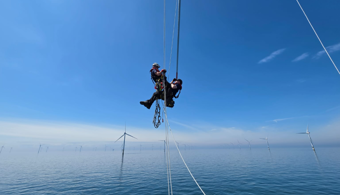
Blade inspection, repair and life extension services for a leading UK energy operator
Read article
Energy operators across South America are under increasing pressure to maintain safe, reliable production while reducing emissions, controlling costs and operating with fewer people on site. These pressures become particularly acute during turnarounds (TARs) and shutdowns, when accurate planning and access to reliable asset information are critical.
Across the region, operators are managing a diverse mix of ageing and modern infrastructure, often in remote and logistically challenging environments. In countries including Argentina, Colombia, Bolivia, Ecuador, Chile and Peru, this creates additional demands around integrity management, maintenance planning, site access and regulatory requirements.
Yet many teams continue to rely on asset information spread across multiple systems, outdated drawings and repeated site visits to answer routine questions. Workforce mobilisation challenges and large integrity backlogs can add further complexity, increasing the potential for rework, delays and missed hazards.
The challenge is therefore not simply to digitise existing information, but to give teams a clearer, more accessible view of their assets so they can plan and execute turnaround and integrity activities with greater confidence.
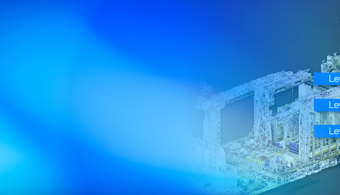
James Fisher’s R2S visual digital twin brings engineering information, asset data and real-world site conditions together within a single visual environment. This enables teams to understand what is happening across an asset and where, without needing to travel to site for every query.
By linking drawings, reports, tasks and imagery directly to real-world locations, R2S provides teams with the context needed to define scopes more accurately, collaborate remotely and make informed decisions throughout planning, execution and integrity management.
Here’s what changed:
Disconnected asset information can be brought into a visual environment, giving teams a clearer view of the asset and associated engineering information.
Drawings, reports, tasks and imagery can be linked directly to their real-world locations, making relevant information easier to access.
Engineers and contractors can familiarise themselves with assets remotely before arriving on site, reducing unnecessary mobilisation and supporting more effective use of time in the field.
Integrity teams can visually locate and group anomalies to plan remediation activities more efficiently.
Teams can collaborate remotely and define turnaround scopes more accurately, helping identify potential clashes earlier and improve coordination between contractors.
The result is a more connected approach to turnaround and integrity management, enabling faster planning, tighter coordination and reduced reliance on physical site access.
R2S has delivered measurable improvements across turnaround and integrity projects globally. The examples presented in the whitepaper demonstrate the potential operational and financial value of applying a visual-first approach:
25% reduction in TAR duration, contributing to approximately US$10 million in earlier return to production in one application.
More than 1,000 field man-days saved by enabling engineers and contractors to familiarise themselves with assets virtually before arriving on site.
70% fewer site visits, reducing repeated walkdowns, travel time and exposure to operational environments.
35% fewer scaffolding hours and 27% less fabric maintenance, supported by the ability to visually locate and group anomalies and plan remediation more efficiently.

Download the "Ageing Assets: Helping South America’s
Onshore Energy Industry Plan with Confidence" case study to share with your team.
 Annual Report 2025