Energy operators in East and Southeast Asia are under pressure to deliver safe, reliable operation while also cutting emissions, reducing costs, and doing more with fewer people onsite.

Turnarounds (TARs) and shutdowns are some of the most demanding moments in the asset lifecycle, yet they’re still often planned with fragmented data, outdated drawings, and repeated site visits that take time, money, and focus away from the work that really matters. 

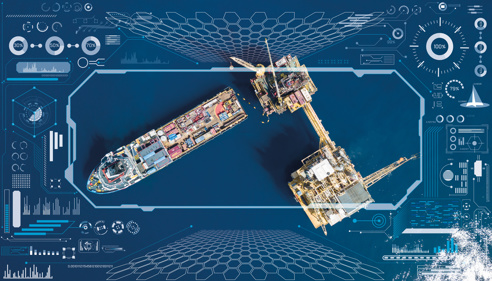
Visual digital twin, such as R2S, change that. By bringing all your engineering, work, and reality data together with clear visual and spatial context, R2S gives your teams clarity on what’s happening and where, without needing to set foot offshore, reducing TAR durations by up to 25%, cutting site visits by 70%, and decreasing integrity backlogs all while lowering carbon emissions and improving workforce safety. 

R2S pays for itself by helping you run safer, smarter, more predictable operations, keeping everyone aligned and your projects moving with clarity and control.

Proven Outcomes
  • 25% TAR duration reduction (~US$10M earlier return to production) → Achieved by enabling teams to scope work accurately the first time, identify clashes early, and coordinate contractors through a shared visual model.
  • >1,000 offshore man-days saved → Achieved by allowing engineers and contractors to familiarise themselves with the site virtually, eliminating unnecessary mobilizations.
  • 70% fewer site visits → Achieved by replacing repeated walkdowns with a high resolution digital twin, reducing helicopter flights and offshore exposure.
  • 35% fewer scaffolding hours and 27% less fabric maintenance → Achieved by spatially mapping anomalies and planning remediation by zones, which streamlines integrity campaigns and reduces rework. 

Why East and Southeast Asia Need Digital Twin 

Given the high TAR cost and daily lost production risks, operators in this region stand to gain significantly from adopting digital twin. R2S directly addresses the region’s dual priorities of energy security and decarbonisation, while delivering quantifiable financial and safety benefits.


  • Malaysia & Brunei: Mature, late-life assets needing efficient decommissioning and integrity planning
  • Thailand: Bedspace constraints and logistics challenges increase the cost of every site visit.
  • Vietnam: Rapid offshore growth under increasing ESG expectations.
  • Japan: Ageing energy infrastructure driving demand for efficient digitalisation and lifecycle optimisation.
  • Singapore: Highly congested refining and petrochemical complexes on Jurong Island require detailed visualisation to optimise TAR planning, reduce SIMOPS conflicts, and improve contractor coordination within tight shutdown windows.
  • South Korea: Accelerating industrial digitalisation, creating demand for robust asset integrity and maintenance solutions. Across these markets, operators must balance energy security with carbon reduction targets, making digital-first TAR planning a strategic accelerator. 

What’s Holding TARs Back Today

How R2S Helps

R2S combines asset visualisation with data-driven integration to create a single visual workspace for planning, execution, and integrity management. By linking drawings, reports, tasks, and imagery directly to real-world locations, R2S helps you plan scopes accurately the first time, collaborate faster, and make confident decisions with the full picture in front of you.  

The result? Faster decisions, tighter coordination, reduced offshore exposure, and measurable savings. 
James Fisher works in challenging, high-risk environments to solve complex problems, and health and safety is our top priority.
Global reach, local service

Let's get this conversation started - provide a few contact details and we'll be in touch right away.